
Why unplanned work exposes weaknesses in asset identification
In any large plant or networked operation, a significant share of maintenance is not planned. Operators spot a hot motor on a walk-through. A technician hears a new vibration on a pump. A contractor notices corrosion on a ladder or platform while doing other work. None of these events waits for the next turnaround.
What happens next depends on one simple thing:
Can the person in the field positively identify the asset, in seconds, every time?
If they cannot, everything slows down. Work requests come through with vague descriptions. Planners and engineers spend time matching photos to drawings. In some cases, the wrong item is inspected, or the issue is never tied back to a specific asset.
This is exactly the gap that modern tagging with QR Codes and RFIDs is designed to close. The broader shift to smart assets and connected operations depends on accurate, automated identification of physical equipment. Consulting work on smart sensors and connected supply chains makes the same point: asset-level data is only valuable if it is trusted, timely and tied to a unique identifier.
Global identification standards, such as those from GS1 formalise that idea. Their specifications describe how a unique identifier, carried on a barcode or RFID tag, becomes the foundation for consistent asset information across systems.
The problem: ad hoc maintenance on top of weak identification
Most asset owners have some form of register and a preventive maintenance plan. The real stress test comes with ad hoc work.
Typical pain points look like this
- Nameplates are covered, corroded or missing
- Tag numbers on drawings do not match what is on the equipment
- Serial numbers must be keyed in by hand, often from awkward positions
- Contractors use their own informal naming when raising issues
When the plant is busy, these frictions create strong incentives to cut corners. A technician may log a defect against the system, area or a generic asset, rather than taking extra time to chase the exact tag. It keeps work moving, but it quietly destroys data quality.
Research on digital maintenance and predictive approaches makes clear that high-quality, asset-level history is a prerequisite for anything beyond basic time-based servicing. Without a consistent identifier in every record, the data set is not suitable for serious analysis.
At the same time, regulatory expectations are increasing. Standards and regulators expect a clear link between each safety-critical asset and its inspection and maintenance trail. Identification based only on legacy nameplates and spreadsheets is increasingly difficult to defend in that context. GS1’s work on ID keys and automatic identification highlights this need to move beyond manual methods to more robust, machine-readable tagging.
The impact: poor identification equals weak data and a higher risk
Weak identification does not just create annoyance for planners. It has four concrete impacts.
First, data quality and insight suffer.
If ten different pumps share a generic description in the system, and defects are logged against the wrong one, trend analysis becomes meaningless. Work on predictive maintenance in Industry 4.0 environments consistently shows that the quality of asset histories and context data is a main constraint on algorithm performance, even when sensors are in place.
Second, downtime and rework increase.
When teams cannot be sure which asset is affected, they compensate with excess labour. They revisit the field to confirm identity, or they scope conservative work. Case material on maintenance inventory digitisation shows that once RFIDs and QR Codes are used to identify items, cycle counts and verifications can be done in a fraction of the time, with fewer repeat visits.
Third, audit and compliance efforts grow.
Auditors increasingly expect a clean line from physical equipment to an inspection report and then to any follow-up work. In sectors like utilities, oil and gas and chemicals, that is no longer optional. Global standards bodies emphasise that automatic identification using barcodes, QR Codes and RFIDs is now a mainstream expectation, not an experimental feature.
Fourth, the path to predictive maintenance is blocked.
Reports from PwC and Deloitte on digital maintenance both stress that predictive models only deliver value when built on robust, consistent operational data. If the basics, such as asset identification, are unreliable, it is hard to justify investment in more advanced analytics.
In short, weak identification quietly taxes every part of the maintenance process.
Modern tagging options: QR Codes and RFIDs
Two technologies dominate practical tagging programs in industrial environments
- QR Codes
- RFIDs
Both aim to do the same job: carry an identifier that tightly links a physical asset to a digital record. They differ in how that identifier is stored and read.
QR Codes
QR Codes are two-dimensional barcodes that can be printed on durable labels and scanned by the camera on a smartphone or tablet. Behind the graphic pattern is either a unique identifier or a URL that the maintenance or inspection system uses to fetch the asset record.
Recent guides on QR Code asset management highlight a few recurring advantages
- Very low tag cost, so it is practical to label large asset populations. Even maintaining on-site printing capabilities to ensure easy distribution of QR code tags.
- No specialist reader hardware, only a camera and an app. This is especially important when considering intrinsic safety requirements for hardware in the field.
- Easy to link scans directly to work orders, inspection forms and documentation
Used well, QR Codes turn every asset into an instant entry point into its history, drawings and current status for anyone carrying a mobile device.
RFIDs
RFIDs use small electronic tags and radio waves. Each tag contains a chip and an antenna. A reader sends out a radio signal. Any tag in range responds with its unique identifier. That identifier is defined using standards such as the Electronic Product Code.
This gives RFIDs three properties that matter in heavy industry
- No line of sight is needed
- Many tags can be read in one pass
- Tags can be engineered to survive harsh or metallic environments
A recent systematic review of RFID in supply chain management underlines the potential benefits: higher inventory accuracy, reduced manual counting, better visibility and faster response across multiple use cases.
Myth buster – Identifiers, not full data
A common misconception is that an RFID tag carries more data than a QR code and hence is more useful. Whilst that is possible, in most applications, both technologies (QR and RFID) typically only carry the unique identifier of the equipment and not the whole history. The full asset record stays in the central platform (linked to the identifier).
Standards organisations like GS1 explicitly promote this pattern because it keeps the tags simple while allowing the back-end systems to evolve.
For maintenance and inspection teams, the design principle is clear: scan first, then work. The scan establishes identity, and the platform supplies history and context.
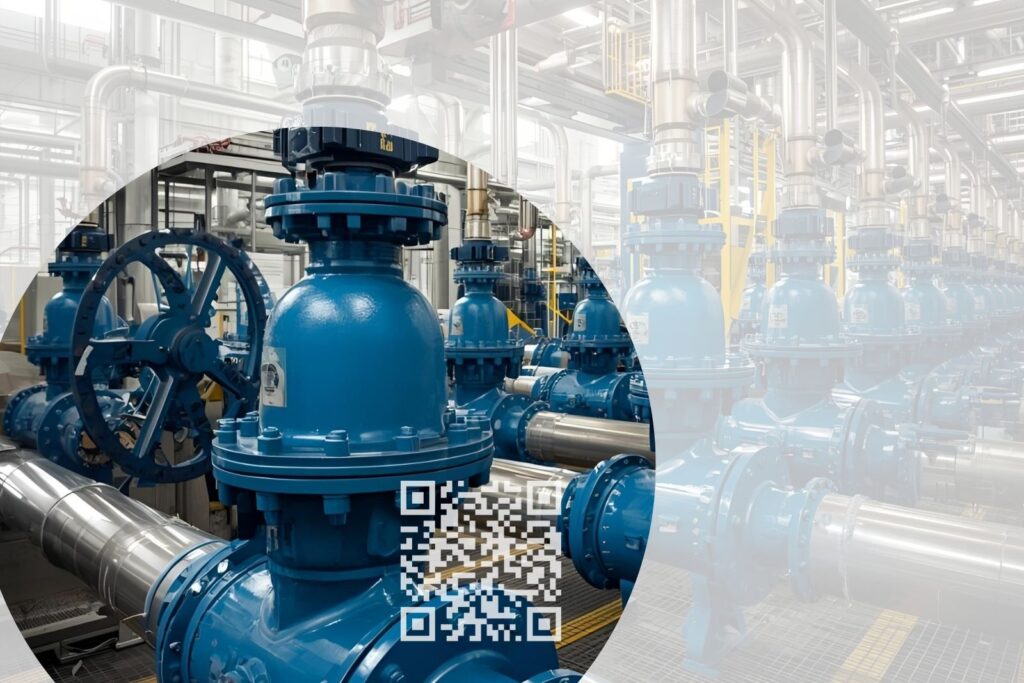
QR Codes versus RFIDs: how to choose for your environment
For an asset owner, the right question is not which technology is better in theory, but which combination works best in real operating conditions.
When QR Codes are the better fit
QR Codes tend to win when
- You already issue mobile devices with cameras to technicians and operators
- You want to tag a very large number of assets for a modest cost
- Most scans will happen during manual inspections, rounds or ad hoc issue reporting

Enable with a label
For QR Code tagging, many operators choose to work with a specialist such as DOTgroup, who focus on industrial labelling rather than generic office printing. Their “enable with a label” approach combines convenient onsite printing with robust materials that stand up to chemicals, weather and mechanical abuse in real plants. When paired with a platform like Inspectivity, QR Codes from DOTgroup give you durable, scannable labels at a fraction of RFID costs and only require a standard mobile device camera to use.
Industry guides focused on industrial asset tracking position QR Codes as the quickest way to get from nothing to a working tagging scheme. The tag material and placement still need engineering, but the process of scanning is intuitive and fits naturally into field work.
Facility management case studies also show that QR Codes are particularly effective when you want to link assets directly to digital procedures, safety instructions or photographic records. A scan can take the user straight to what they need to see, without searching.
Are RFIDs worth the investment?
RFIDs need more upfront investment and more design work. There are specialist use cases where they do very well, for example, in automated warehouses or where tags are completely hidden and cannot be seen. In those environments, evidence from sectors such as retail and logistics shows RFIDs improving inventory accuracy by double-digit percentages and cutting audit effort.
For most maintenance teams, especially in heavy industry, RFIDs are harder to justify. Intrinsically safe devices are often mandatory. RFID tags typically require additional readers, and those readers must be assessed for ignition safety. Many intrinsically safe tablets do not include NFC capability as standard, so you can end up adding more hardware, more testing and more complexity just to read the tags. In contrast, a QR Code can usually be read by the camera that teams already carry in the field.
A hybrid model is often the right answer
Because of this, many organisations place QR Codes at the centre of their strategy and use RFIDs only where they are clearly needed.
QR Codes sit on most maintainable assets and locations. They give technicians and operators a simple way to scan an asset during inspections, rounds or ad hoc issue reporting. They are affordable to roll out at scale, easy to replace and only need a camera.
RFIDs are reserved for selected use cases where QR labels really struggle. Typical examples are very high dust environments, automated stock areas or locations where there is no realistic way to keep a visual label in place.
Industrial commentary increasingly describes QR Codes and RFIDs as complementary rather than competing. Modern inspection and asset platforms can read both and route the scans into the same asset hierarchy and workflows. The practical pattern is clear. Lead with QR Codes for most maintenance and inspection work and bring in RFIDs only where they add clear additional value.
Tagging in practice: from vague descriptions to asset-level events
Consider a fertiliser plant or refinery with thousands of tags on pumps, valves, exchangers, conveyors and access systems. Under a traditional approach, an operator might report
“Vibration on pump in Unit 200″
A planner then has to identify which pump, check photos, cross-reference drawings and perhaps send someone back to confirm. The issue might be logged under the wrong tag, or simply under a generic system record.
With QR Codes and RFIDs in place, supported by a digital inspection platform, the same scenario looks different
- The operator notices vibration and scans the QR Code on the pump using a tablet
- The inspection app opens the exact asset record inside the correct unit and hierarchy
- The operator records a vibration issue, attaches photos and rates the severity
- The work request is generated with a specific asset ID, location, history and evidence
In most maintenance contexts, QR Codes carry the bulk of this workload. They are visible, easy to scan with existing mobile devices and simple to replace if they are damaged. RFIDs may still be used in specialised situations, but for day-to-day inspections, rounds and ad hoc issue reporting, QR Codes are usually the most practical choice.
The core point is simple. Tagging ensures that every unplanned observation becomes an asset-level event, not a vague comment. That in turn creates the condition-based data set that predictive and risk-based maintenance needs. Reports from PwC and other advisers on predictive maintenance emphasise this link between systematic data capture and the ability to move beyond purely time-based strategies.
Cost and implementation considerations
A tagging program has real cost, but with a deliberate scope and a staged approach, that cost is manageable.
Key decisions include:
Scope of tagging Start by identifying critical equipment classes and locations where ad hoc maintenance is most common, or where inspection data is most valuable. Tagging every nut and bolt is not necessary.
Tag technology and materials For QR Codes, the main decisions are label material, adhesive/stainliness steel cable tie and of course the label placement. In practice, that means selecting a durable label that will survive the environment and deciding where on the asset it is easiest and safest to scan. With the right partner, on-site printing and replacement are simple and low-cost. For RFIDs, you also need to consider tag type, read range, reader hardware and how it will be powered and certified, which makes RFID design and rollout more complex. Standards and best practice material from GS1 offer useful guidance on matching symbol types and media to business needs.
Integration with systems and workflows Tagging delivers value as soon as each QR Code or RFID links to a digital asset record in the inspection platform and is used in day-to-day inspection and work order workflows, regardless of whether ERP or CMMS integration is in place. Deloitte’s work on smart sensors and supply chain highlights that the real value comes when automatic identification is tied to processes and decision making, not when it exists in isolation.
Change management Finally, scanning must become the default behaviour. That means updating procedures, training field staff and making sure the mobile tools are quick and reliable. Experience from digital maintenance programs shows that small frictions at this point can undermine otherwise solid technical designs.
The financial case should be built around avoiding time loss, better audit readiness, reduced error and the enabling effect on more advanced maintenance strategies, not just on the cost of tags and readers.
How Inspectivity can support QR Codes and RFIDs
For tagging to deliver value, a digital inspection platform such as Inspectivity has to treat the tag as a first-class key. In practical terms, that means:
- Each asset in the hierarchy can store QR Code or RFID tag identifiers
- The mobile inspection app can scan QR Codes and, where RFIDs are deployed, receive tag reads from compatible readers
- A scan in the field takes the user straight to the right asset inspection record
- All issues, photos and inspection results created after a scan are automatically linked back to that asset
This is where Inspectivity is well placed. The platform is asset-centric and already structured around a strong asset hierarchy, flexible forms and mobile inspections. Tagging extends that model out into the physical plant, so the asset record becomes the natural hub for both planned and ad hoc work.
In practice, the implementation pattern usually looks like this:
- Model the asset hierarchy in Inspectivity as the single source of truth for inspection assets
- Generate and apply QR Codes for priority assets, and RFIDs where required
- Load the identifiers into the Inspectivity asset records
- Update inspection templates and issue types so that scanning is the start of every task
- Monitor adoption and data quality, then expand tagging to additional asset classes
This approach keeps the program grounded in real work and allows you to demonstrate value quickly, while still building towards a richer inspection and maintenance environment.
Conclusion: tagging as the foundation of better maintenance
Planned maintenance will always be part of good engineering practice. What changes the game is how well you handle the volume of unplanned and ad hoc events that arise between those planned tasks.
QR Codes and RFIDs do not replace good engineering judgement, but they give your people in the field a simple, reliable way to anchor every observation to a specific asset. Combined with a digital inspection platform such as Inspectivity, they turn those observations into structured data that can support compliance today and predictive maintenance tomorrow.
As you refine your digital inspection roadmap, the question is no longer whether to tag, but where to start and how to scale. A focused rollout on the assets that matter most, backed by Inspectivity and a clear QR Code and RFID strategy, is a practical step you can take now to support safer, more reliable and more data-driven operations.